The Rise of the Arcade as a Social Space
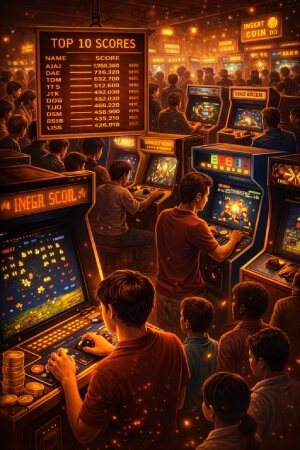
Arcades appeared in an era where personal computing was rare, and fun was a communal activity. There were cheap machines that conveyed short, repeat gaming episodes which rewarded skill and practice and usually answered the curiosity of the game's spectators. Also, arcades got billed as a communal atmosphere, well-publicized for competition, noisy enough to hinder conversation, and often crowded. In such an environment, it made a new kind of game. Sessions within said time were dead. High score-listing boards were everywhere.
This answered the way a game was created. Short but intense sessions, fast growth in difficulty, the easy-to-defeat-yet-hard-to-master game design concept brought great success in designing games. However, this juxtaposition of accessibility and challenge served as almost a general defining aspect for an arcade game.
From Novelty Machines to Dedicated Game Spaces
Early arcades evolved from mechanical amusements and pinball halls. As video technology matured in the late 1970s, cabinets dedicated solely to electronic games began to dominate floors. These spaces became hubs for teenagers, office workers on breaks, and anyone drawn by competition and spectacle.
The physical layout mattered. Machines were placed side by side, encouraging spectatorship as much as participation. Watching a skilled player could be as engaging as playing, reinforcing the arcade as a shared experience rather than a solitary one.
The Importance of Coin-Based Design
The requirement to insert a coin for each session directly influenced game design. Developers needed games to feel fair but challenging enough to encourage repeated play. This led to mechanics where mistakes were costly, learning curves were steep, and improvement came through repetition rather than tutorials.
Lives, timers, and escalating difficulty were economic tools as much as creative choices. The structure ensured steady revenue while giving players a sense of progression and achievement when they lasted longer or scored higher.
Competition, High Scores, and Public Identity
High score tables turned games into social ranking systems. Initials etched at the top of a leaderboard became a form of local fame. This public recognition encouraged rivalry and mastery, pushing players to invest time and money to outperform others.
The competitive culture also influenced behavior. Players developed strategies, shared tips, and sometimes guarded secrets closely. In this way, arcade games fostered early gaming communities built around skill and reputation.
Core Genres That Defined the Arcade Era
A single style of video games did not meet emergence, but instead a variety of genres emphasizing different skills like reflexes, pattern recognition, timing, or spatial awareness were recorded. These genres generated distinctiveness within common design principles well suited to short, repeatable sessions of play.
The technology limits this complexity by the standards of modern times since the constraints also fostered creativity. The emphasis was on mechanics so clear that watching someone play a game gave a good sense of how to design a game, the recognizable visual identity, and instantly needing a go-for-the-gold prize.
Several of these genres remain influential even by today.
Maze Games and Spatial Mastery
Maze games challenged players to navigate enclosed spaces while avoiding enemies or collecting items. The most iconic example is Pac-Man, which combined simple controls with escalating tension. Players learned enemy patterns, optimized routes, and made split-second decisions under pressure.
What made maze games enduring was their balance of predictability and chaos. Enemy behavior followed rules, but small mistakes quickly became fatal. This rewarded memory and planning while maintaining constant urgency, making each round feel unique despite familiar layouts.
Shoot ’Em Ups and Reflex-Based Play
Shoot ’em ups, often called shmups, placed players in control of ships or characters firing projectiles at waves of enemies. Titles like Galaga emphasized precision, pattern recognition, and rapid response times. Screens filled with moving threats required constant attention.
These games pushed hardware limits with fast-moving sprites and dense action. They also introduced risk-reward mechanics, such as sacrificing safety for higher scores. Mastery involved memorizing enemy formations and maintaining focus under visual overload.
Platform Games and Timing Precision
Platformers focused on movement across vertical or horizontal environments filled with obstacles. Donkey Kong introduced characters, narratives, and multi-stage progression, expanding what arcade games could represent.
Timing was central to success. Jumping too early or too late often meant failure. These games trained players to read visual cues and develop rhythm, blending reflexes with foresight. The genre’s clarity made it approachable while still demanding practice.
Fighting Games and Head-to-Head Competition
Although later fighting games would dominate arcades in the 1990s, early examples laid the groundwork for competitive, player-versus-player design. Games like Karate Champ introduced direct duels based on timing, spacing, and move selection.
These games emphasized human unpredictability rather than fixed patterns. Facing another player added psychological tension, turning each match into a test of anticipation and adaptability. This social dimension reinforced arcades as competitive arenas.
Genres Built Around Speed, Motion, and Simulation
Developers have started dealing with scrolling screens and some fluid motion inside these games. The hardware had been improved to integrate the marketing value of such elements, and the good news is that developers were doing things openly, with the audience watching the experiments, and that was having its share even beyond the gadgets scrounging for extra coins.
Now, this offers a quick view-and-pick-like scene on how developers have dared to step ahead graciously in development; step to move interactively with the machines and not just look for some quick entertainment.
Racing Games and the Illusion of Speed
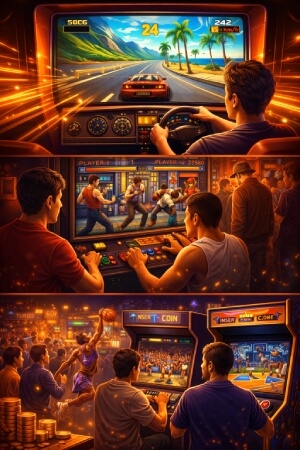
Racing games like Out Run used scrolling visuals, sound design, and steering controls to simulate speed. Players raced against timers rather than opponents, focusing on memorization of courses and smooth control.
The appeal lay in spectacle and accessibility. Even novice players could enjoy the sensation of motion, while skilled players optimized routes and maintained momentum. These games demonstrated how arcades could deliver experiences difficult to replicate at home.
Beat ’Em Ups and Cooperative Play
Beat ’em ups encouraged players to fight through waves of enemies using simple attack combinations. Titles like Double Dragon popularized cooperative gameplay, allowing multiple players to share the screen and progress together.
This genre shifted the arcade experience from pure competition to shared survival. Cooperation introduced social dynamics, such as coordination and role division, while still preserving challenge through increasing enemy difficulty.
Sports Games and Simplified Realism
Sports-themed arcade games focused on exaggerated action rather than simulation accuracy. Games like NBA Jam emphasized fast pacing, bold visuals, and accessible controls.
These titles lowered barriers to entry while maintaining excitement. By prioritizing spectacle over realism, arcade sports games appealed to casual players and spectators alike, reinforcing the arcade as a lively, inclusive space.
Design Constraints That Shaped Creativity
Arcade developers worked within strict limitations, including memory, processing power, and cabinet hardware. These constraints forced clarity in design and economy in storytelling. Every element had to serve gameplay directly, as there was little room for excess.
Rather than hindering creativity, limitations often sharpened it. Developers focused on core mechanics, memorable characters, and distinctive audio-visual cues that could attract attention in crowded spaces.
Visual Identity and Immediate Recognition
In a room full of competing machines, games needed to stand out instantly. Bright colors, bold character designs, and distinctive animations helped attract players. Icons like Pac-Man or Donkey Kong were recognizable even from a distance.
This emphasis on visual clarity influenced later branding in gaming. Characters became symbols, and cabinets themselves acted as advertisements, teaching players what to expect before they even inserted a coin.
Sound Design as Feedback and Atmosphere
Sound effects and music played crucial roles in arcade games. Simple audio cues communicated success, danger, or failure immediately. Repetitive but catchy soundtracks reinforced pacing and emotional tone.
Because arcades were noisy environments, sounds needed to cut through ambient noise. This led to exaggerated effects that remain iconic today, shaping how players remember these games decades later.
Difficulty Curves and Player Retention
Balancing difficulty was essential. Games needed to challenge experienced players while not discouraging newcomers. Early stages were often forgiving, teaching mechanics implicitly, while later stages demanded mastery.
This approach created a sense of progression within short sessions. Even brief improvements felt meaningful, encouraging players to return and try again.
The Lasting Influence of Classic Arcade Genres
Although arcades declined with the rise of home consoles, their influence persists. Many modern games borrow mechanics, aesthetics, and design philosophies from classic arcade genres. Indie developers, in particular, often revisit these roots.
Arcade principles such as tight controls, immediate feedback, and skill-based progression remain relevant. They offer lessons in focus and restraint that contrast with more expansive modern designs.
Revival Through Emulation and Retro Culture
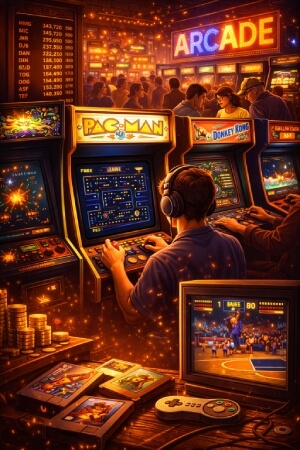
Classic arcade games continue to find audiences through emulation, re-releases, and dedicated retro arcades. These spaces preserve not only the games but also the social atmosphere that defined the era.
For many players, revisiting these titles offers insight into gaming’s foundations. For new players, they provide a different pace and challenge compared to contemporary games.
Design Lessons That Still Apply
Modern developers often cite arcade games as examples of effective design under constraints. Clear objectives, responsive controls, and immediate consequences remain hallmarks of engaging gameplay.
These lessons extend beyond games. They inform user experience design, interaction feedback, and the balance between challenge and accessibility in digital products more broadly.
Cultural Memory and Shared Experience
Arcade games occupy a unique place in collective memory. They are tied to physical locations, social rituals, and specific moments in time. Unlike private gaming experiences, arcades created shared memories rooted in place and presence.
This communal aspect explains why arcade culture continues to inspire nostalgia and creative reinterpretation across media.
Genres, Games, and the Shape of an Era
Classic arcade games were defined not by realism or narrative depth, but by immediacy and interaction. Genres emerged organically from technical limits and economic realities, yet they produced enduring designs and characters.
Together, these games and genres shaped how people understood play, competition, and digital interaction. Their influence extends far beyond their original cabinets, continuing to inform how games are designed and experienced today.
The Coin That Started It All
Classic arcade games are more than mere old-fashioned entertainment tools. They tell us about a time when design, limitation, and social interaction came together to create something to continue. Understanding the genres and individual games that defined great arcade game-wisdom, one can see why their legacy still pertains to those special experiences, those that are remembered to have been made great because of the simplicity, challenge, and shared space.
🕹 Arcade Game of the Day 🕹
— Nostalgic Gamer (@16bitnostalgia) December 22, 2025
Arkanoid • 1986 • Taito pic.twitter.com/5QEasPiRAZ