The Changing Role of Arcades in Public Entertainment
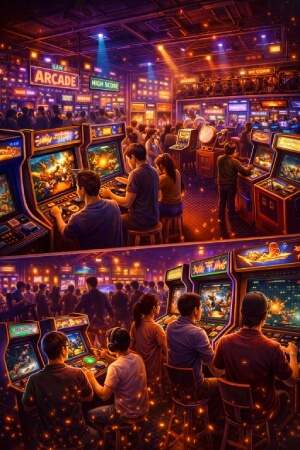
Arcades are no longer the center of youth culture as they were once, but hold yet another special place in public amusements. They do not compete with home consoles or mobile games, setting themselves as a place for shared, physical experiences easily unmatched with those at home. This shift transformed arcades from being used as a hangout into a go-to place that tourists, people grabbing a night out, or those celebrating special occasions usually visit.
Arcade establishments are no longer about access to games these days; they are more about the quality of the establishment. Sound, lighting, physical machine elements surroundings, and other live players characterize an atmosphere of participation over passive consumption that has facilitated the existence and resurgence of arcade parlors by declaring the very element of what arcade gaming ended up being.
From Everyday Spaces to Destination Venues
In the past, arcades were woven into daily life, often located near schools, shopping streets, or transit hubs. Modern arcades are more likely to be planned destinations. They appear in entertainment districts, malls, or mixed-use developments where visitors arrive with the intention of spending time, not just dropping in briefly. This shift reflects broader changes in how people structure leisure, favoring planned experiences over spontaneous visits.
As destination venues, arcades focus on longer stays and higher engagement. Seating areas, food options, and curated layouts encourage players to linger. The goal is no longer quick turnover but sustained attention, transforming arcade visits into social events rather than short gaming sessions.
Arcades as Social and Shared Experiences
Modern arcades emphasize group interaction. Multiplayer games, competitive scoreboards, and cooperative challenges are central to the experience. Even single-player machines are often designed to be watched, turning individual play into a shared moment. This social framing aligns with a broader trend in entertainment where people seek activities they can experience together, both offline and online.
The physical presence of others adds unpredictability and energy. Cheers, reactions, and informal competition contribute to the appeal. In this way, arcades function less like traditional gaming platforms and more like live entertainment spaces, where the audience is part of the experience.
The Influence of Broader Leisure Trends
Arcades have adapted to compete with other leisure options such as escape rooms, interactive museums, and themed attractions. These industries share an emphasis on immersion, novelty, and experience-driven design. As a result, modern arcades often borrow ideas from these spaces, including thematic decor, narrative elements, and time-based access models.
This convergence reflects changing expectations. Visitors increasingly look for activities that feel distinctive and memorable. Arcades that succeed today understand this shift and design experiences that stand out rather than relying solely on traditional gaming appeal.
Technology and Game Design in Contemporary Arcades
Looking at the combination of technology that has shaped the evolution of arcades, hardware evolutions and displays have been the conduct, allowing the arcade games to become more immersive and physically engaging. In effect, the arcade machine has its role to play that has change according to the home video game in terms of graphics, concentrating more on scale, motion, tactile feedback, and real-time physical gaming that are hard to duplicate consciously.
Arcade game design has also realized that there is a need to react quickly to these very diverse sets of tastes and groups that we designate as audiences, just within the time frame; thus, modern arcade games attempt to keep upfront rewards in front of these hard-to-please, easily vanishing, but perpetually involved players. It's generally through this balance between accessibility and depth that modern arcade games have thrived.
Immersive Hardware and Physical Interaction
One defining feature of modern arcades is the emphasis on physical interaction. Motion platforms, steering wheels, rhythm controllers, and full-body input systems create experiences that rely on movement and coordination. These machines turn gaming into a physical activity, blurring the line between play and performance.
This focus on embodiment sets arcade gaming apart from home gaming. The physical commitment required to play makes each session feel more event-like. Players are not just pressing buttons; they are stepping into machines that demand attention, effort, and presence.
Short-Form Gameplay and Instant Feedback
Arcade games are designed around brief sessions. Even complex machines are structured to deliver clear objectives and outcomes within minutes. This design responds to the realities of public spaces, where players may be waiting their turn or sharing time with others.
Instant feedback is central to this approach. Scores, visual effects, and sound cues provide immediate reinforcement, keeping players engaged without requiring long learning curves. This design philosophy allows arcades to welcome a broad audience, including casual visitors with little gaming experience.
Blending Digital Systems with Physical Space
Modern arcades increasingly integrate digital systems behind the scenes. Player cards, digital leaderboards, and account-based progress tracking connect individual sessions into longer-term engagement. These systems allow arcades to personalize experiences and encourage return visits without disrupting the immediacy of gameplay.
At the same time, these digital layers remain secondary to the physical environment. The machine, the space, and the social context remain the primary focus. Technology supports the experience rather than overshadowing it, reinforcing the arcade’s role as a tangible, shared space.
Business Models and Operational Shifts
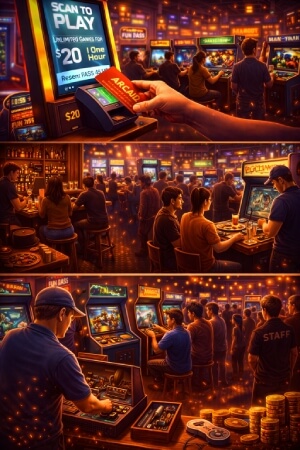
The economic structure of the arcades is transforming. Traditional coin-based machines, designed to get the maximum money out of those few minutes, have been replaced with today's pricing systems intent on prolonging one's stay. With this greater adaptability, they hope to cast their net wider in reeling in the crowds, to one extent or another. These changes are indicative of both a tendency toward redesigned arcade spaces as dictated by the consumer and the logistical imperatives become inherent in the modern arcade.
From Pay-Per-Play to Time-Based Access
While pay-per-play still exists, many modern arcades offer time-based access or bundled credits. This model reduces friction for visitors, allowing them to focus on enjoyment rather than constantly managing payments. It also encourages exploration, as players are more willing to try unfamiliar games.
Time-based access aligns with the idea of arcades as destinations. Visitors plan their stay, knowing they can sample a wide range of experiences without incremental costs. For operators, this model provides more predictable revenue and smoother crowd management.
Food, Beverage, and Hybrid Spaces
Many contemporary arcades incorporate food and beverage offerings as core components rather than add-ons. This integration extends visit length and broadens the audience, attracting people who may not come solely for gaming. The arcade becomes part of a larger social outing rather than the sole focus.
Hybrid spaces also allow arcades to operate across different times of day. Families may visit earlier, while adults arrive later for social gatherings. This flexibility helps maximize space usage and supports financial stability in competitive urban environments.
Maintenance, Staffing, and Experience Management
Operating a modern arcade requires ongoing technical expertise. Machines are complex, and downtime directly affects the visitor experience. As a result, staffing increasingly includes technicians and experience managers alongside traditional attendants.
Experience management has become a priority. Cleanliness, machine availability, sound levels, and crowd flow all shape how visitors perceive value. Successful arcades recognize that consistency and reliability are as important as novelty.
Cultural Meaning and Nostalgia in Modern Arcades
Nostalgia occupies another magisterial place against the backdrop of the contemporary arcade age. For a great number of people, arcades bring back memories of bygone gaming eras, social bonding events, or one's early growth experiences. This full retrospective is embraced by the new arcades, who, however, update the feeling for current and possible generation capacities.
Revisiting Classic Games and Aesthetics
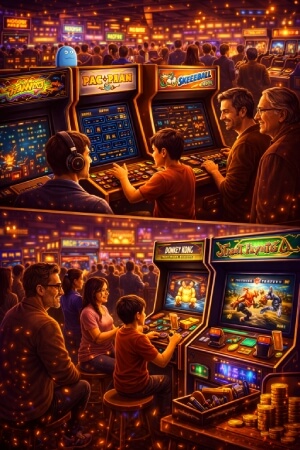
Classic arcade games and visual styles remain popular, not only as playable machines but as design references. Cabinets, fonts, and sound effects signal continuity with the past. These elements create an emotional bridge for older players while introducing younger visitors to arcade history.
The presence of classic games also reinforces the arcade’s identity as a cultural archive. These machines represent milestones in game design and technology, giving arcades a curatorial role alongside their entertainment function.
Nostalgia as Experience, Not Replication
Modern arcades rarely aim to replicate past environments exactly. Instead, they use nostalgia selectively, blending it with contemporary comfort and design standards. Lighting, seating, and acoustics are updated, making spaces more welcoming and accessible.
This approach acknowledges that nostalgia is emotional rather than literal. Visitors are drawn to the feeling of discovery and play, not necessarily to precise historical accuracy. Arcades that understand this distinction avoid becoming static or exclusionary.
Cross-Generational Appeal
One of the strengths of modern arcades is their ability to attract diverse age groups simultaneously. Parents introduce children to games they once played, while younger visitors bring new perspectives and preferences. This interaction reinforces the arcade’s role as a shared cultural space.
Cross-generational appeal also influences game selection. Operators curate a mix of experiences that resonate with different backgrounds, ensuring that no single audience dominates the environment.
Arcades in a Digital and Online World
The rise of online gaming and mobile platforms has reshaped expectations around access and convenience. Arcades exist within this digital ecosystem rather than outside it. Their continued relevance depends on how effectively they complement, rather than compete with, at-home gaming.
Arcades today often serve as physical counterpoints to digital life. They offer tangible interaction and public engagement in contrast to screen-based isolation. This positioning gives arcades a distinct purpose in a highly connected world.
In an era where games are instantly accessible, physical presence becomes a key differentiator. The weight of controls, the scale of machines, and the surrounding environment create sensory experiences that digital platforms cannot fully replicate.
Play, Presence, and Persistence
Arcades have been around for ages and are ever-evolving to meet the needs and demands of today. The concept of human physicality and heightened social interaction is what brings joy within their mechanism: they teem with juju, but the setting throws in a denture to threaten them entirely. It is the long, evolving rave balance between old times and the near-world.
🕹 Arcade Game of the Day 🕹
— Nostalgic Gamer (@16bitnostalgia) December 22, 2025
Arkanoid • 1986 • Taito pic.twitter.com/5QEasPiRAZ